Choosing a Roofing Company in Minneapolis
Most roofing companies in Minneapolis can lay shingles. The ones worth hiring are the ones who go into the attic first, write down how many layers are coming off, and can tell you where the ice barrier stops.
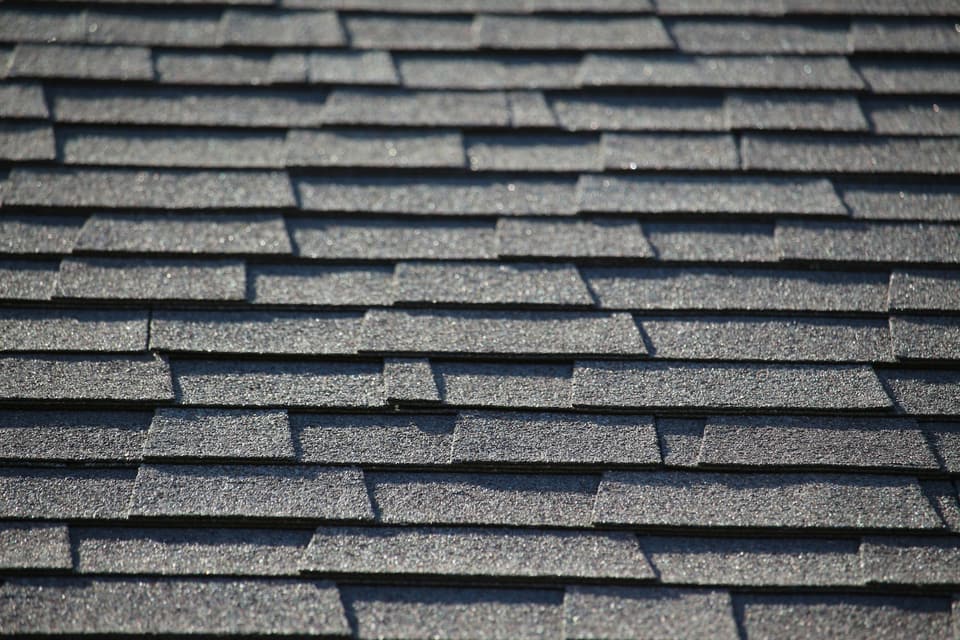
Start with the house, not the shingle brochure
A good first visit on a Minneapolis house takes longer than people expect, and most of it is not spent on the roof. Over 40 percent of the city's homes were built before 1940, and a large share of them are bungalows and story-and-a-half houses where the upstairs ceiling follows the roof slope. On those houses the roof is only half the system. The other half is the attic, the knee-wall spaces behind the upstairs closets, and whatever air leaks up through the top-floor ceiling.
So the visit worth having includes a look inside: water stains on the rafters, frost on the underside of the sheathing in winter, rusty nail tips, insulation pressed flat or missing over the knee walls, a bath fan venting into the attic instead of outside. Those tell the roofer whether the leak you called about is a roofing problem or a heat problem. A company that quotes from the driveway, or from a drone photo, has skipped the part of the job that decides whether the new roof dams up again next February.
Check the licence before you check the reviews
Minnesota licenses residential roofing at the state level. The Department of Labor and Industry (DLI) issues a residential roofer licence, and a company that does broader remodelling work may hold a residential building contractor or remodeler licence instead. Only companies need the licence, and each one has to name a qualifying person who passed the exam and keeps up continuing education.
Checking takes two minutes. DLI's public licence and registration lookup, at dli.mn.gov/license-and-registration-lookup, shows whether the licence is active and whether there has been enforcement action against it. Search the exact business name on the estimate. If the name on the truck, the name on the contract and the name on the licence do not match, ask why before signing anything.
This site is not a roofing company and holds no licence. The independent company your call goes to is the one that should show you theirs, and you are entitled to look it up yourself rather than take anyone's word for it, including ours.
Residential steep-slope and commercial flat roofs are different trades
Search for a roofing company in Minneapolis and several of the top results lead with flat commercial roofing: membrane roofs on apartment blocks and warehouses, with rooftop units and parapet walls. That is real skill, and it is not the same work as tearing off two layers of asphalt shingles from a 1924 Tudor with three valleys and a brick chimney. If your house is a pitched shingle roof, ask how much of the company's work is residential shingle. If you own one of the Wedge or Uptown duplexes with a low-slope rear section, ask whether they do both, because the transition between the two is where those roofs tend to leak.
What the estimate should actually list
A one-line estimate that says "remove and replace roof" tells you the price and nothing else. Minnesota's insurance-claims law (Minn. Stat. 325E.66) already requires a good-faith, itemised estimate whenever a residential contractor's work is being paid from insurance. Ask for the same on a cash job. The lines worth seeing:
- How many layers are being torn off, and the price per extra layer if a second one turns up
- Decking: the price per sheet for replacing rotten or delaminated sheathing, and roughly how many sheets they expect
- Ice barrier: where it starts and where it stops. Code says at least 24 inches inside the exterior wall line; valleys and low eaves often get more
- Underlayment over the rest of the deck, and the type
- Flashing: whether chimney, wall and valley flashings are being replaced or reused
- Ventilation: what is being added or changed at the ridge and soffits, if anything
- The city permit, disposal, and the magnet sweep for nails afterwards
Two estimates for the same house that differ by several thousand dollars usually differ on these lines rather than on the shingle. A low number with no decking allowance is not cheaper. It is a number that grows once the old roof is off.
Ice barrier is where Minneapolis roofs differ from the brochure
Minnesota's residential code treats the whole state as a severe-ice climate. Every reroof here needs an ice barrier: either a self-adhering membrane or two layers of felt cemented together, running from the eave edge to a point at least 24 inches inside the exterior wall line. On a house with a deep overhang, that means the membrane has to run well up the slope to reach 24 inches past the wall. On a story-and-a-half house with a cold eave and a warm room immediately above it, many roofers run it further, and run it up every valley. Ask how far. A quote that says "ice and water shield at eaves" without a measurement leaves the one detail that matters most here undecided.
Tear-off or a layer over the top
The code that Minneapolis enforces allows one new layer of asphalt shingles over one existing layer, if the old roof is not water-soaked or badly deteriorated and the shingle maker allows it. It does not allow a third layer, and it does not allow shingles over old wood shakes or slate.
Plenty of houses in Northeast and South Minneapolis were already re-roofed over the top once, decades ago, which means the next roof is a full tear-off whether anyone wants one or not. Even where an overlay is legal, most companies here recommend tearing off, because it is the only way to see and replace soft decking at the eaves, which is exactly where ice dams do their damage.
Permits in Minneapolis
The City of Minneapolis requires a building permit for all re-roofing on a house, except repairs that use less than one bundle of shingles, about 33 square feet of roof. A final inspection is required once the work is done. Repairs to rafters or trusses need an additional permit and a framing inspection. Normally the licensed company pulls the permit. If anyone suggests skipping it to save money, that is the company to skip. The suburbs have their own permit offices and rules, and the area pages note what is known about each. The permit guide has the detail for the city.
Hail, insurance and Minnesota law
After a hailstorm, the roofing company and the insurance company end up in the same conversation, and Minnesota has written rules about where the line between them sits. Under Minn. Stat. 325E.66 a residential roofer paid from insurance proceeds may not offer to pay or rebate your deductible, may not pay you for referrals or for putting a sign in your yard, and may not interpret your policy or negotiate the claim on your behalf unless licensed as a public adjuster.
Under Minn. Stat. 326B.811, if you sign a roofing contract that depends on an insurance payout and the insurer then denies the claim, you can cancel within 72 hours of being told about the denial, in writing. The contractor has to give you that notice in bold type, with a detachable cancellation form, before you sign. If those pages are missing from the contract, that tells you something about the company.
When to book
Search demand for a roofing company in Minneapolis peaks in October, at about 12,100 searches in the most recent year of data, against fewer than 1,000 in August. That is the pre-winter rush: people who noticed something over the summer and want it done before snow. Calendars fill accordingly. Shingles need warmth to seal down properly, so full replacements generally run from spring into late fall, and anything booked in November depends on the weather holding. If you are reading this in late summer, getting a look now usually means a better choice of dates.
Getting ahead of the fall rush is the easiest way to get the date you want. Call for a free roof look now and the company can tell you whether this is a repair, a replacement, or something that can wait until spring.
Warranties, and whose name is on them
There are two warranties on a new roof and they cover different things. The shingle manufacturer warrants the material, and some upgraded warranties are only available when a certified installer uses the maker's full system of underlayment, starter and ridge. The roofing company warrants its workmanship, which is where leaks at flashings and valleys actually come from. Ask for both in writing, ask how long the workmanship warranty runs, and ask whether it transfers if you sell the house. A long material warranty from a company with a one-year workmanship promise is mostly a material warranty.
| Question | A good answer | A reason to keep looking |
|---|---|---|
| Can I see your DLI licence number? | Gives it, and the name matches the contract | Vague, or a licence in a different name |
| Will you look in the attic? | Yes, before quoting | Quotes from the ground or a photo |
| How far does the ice barrier go? | A measurement, plus valleys | "Ice shield at the eaves" and nothing more |
| How many layers come off? | Counted at the edge, priced per extra layer | No mention of layers at all |
| Who pulls the permit? | We do, it is in the price | Suggests you do not need one |
| Will you cover my deductible? | No, that is not allowed in Minnesota | Yes, or "we will work something out" |
Where we work in Minneapolis
- Linden HillsSouthwestTudors and bungalows from the 1920s near Lake Harriet; steep front gables and dormer valleys are where snowmelt refreezes first
- Nokomis areaSouthTudor Revival houses around the Nokomis Knoll historic district, with cross-gabled roofs that put several valleys on one small house
- LongfellowSouthlargely built 1906 to the 1920s; bungalows and story-and-a-half houses whose upstairs ceilings sit right under the roof deck
- Lowry Hill East (the Wedge)Southwestolder duplexes and triplexes near Uptown, where a roof job means coordinating with tenants on both floors
- Waite ParkNortheastfilled in during the postwar boom; 1950s ramblers with low-pitched roofs and attics you can actually get into and insulate
- Lower NortheastNortheastHolland, Logan Park and the blocks toward the river, with some of the oldest frame houses on that side of the city and plenty of re-roofed-over-the-top history
ZIP codes served55406 · 55407 · 55408 · 55409 · 55410 · 55411 · 55412 · 55413 · 55416 · 55417 · 55418 · 55419
Common questions
Is this site a roofing company?
No. MPLS Roofing Pros is an advertising and referral service operated by Pinecrest Advisory Services, LLC. Your call or request goes to an independent local roofing company. We do not do roof work and hold no contractor licence.
How do I check a Minnesota roofer licence?
Use the Minnesota Department of Labor and Industry licence and registration lookup at dli.mn.gov. Search the business name exactly as it appears on the estimate, and check that the licence is active.
Does a roofing company need a permit in Minneapolis?
For re-roofing a house, yes. The city exempts only repairs using less than one bundle of shingles. The licensed company normally pulls it and books the final inspection.
How many quotes should I get?
Two or three, compared line by line. Look at layers, decking allowance, ice barrier extent and flashing before you look at the total.
Can a roofer pay my insurance deductible?
No. Minnesota law bars a residential roofer paid from insurance proceeds from offering to pay or rebate the deductible. An offer to do so is a reason to walk away.
Should the roofer also look at my attic insulation?
On most Minneapolis houses, yes. Ice dams usually start with warm air leaking into the attic. Some roofing companies do air sealing and insulation; others will tell you to call an insulation contractor. Either is fine as long as someone looks.
How long does a roof replacement take?
A typical single-family roof is often one to three days once work starts, longer with steep pitches, multiple layers or a lot of decking to replace. Weather moves it more than anything.
What if my house is a duplex?
The permit rules are the same for one- and two-family dwellings. The practical difference is notice: tenants upstairs and down need to know when the tear-off is happening, and where their cars cannot park.
Other roof work in Minneapolis
- Roof Repair in Minneapolis
- Roof Replacement in Minneapolis
- Roof Leak Repair in Minneapolis
- Ice Dam Roof Damage in Minneapolis
- Hail Damage Roof Repair in Minneapolis
Also serving
Roofing Company is available beyond Minneapolis, across Southwest Minneapolis , Northeast Minneapolis , Edina , St. Louis Park and Richfield .
Ask about roofing company
Say what you are seeing: a stain, ice at the eaves, shingles in the yard. A local roofing company will reply and arrange a look, usually within a few days, sooner for an active leak. Answered Mon–Sat · leave a message after hours and you get a call back Or call (651) 381-5283 if it is leaking now; a person picks up faster than a form gets read.