Heavy Snow on the Roof: When to Rake and When to Worry
Updated 2026-10 · Minneapolis, MN
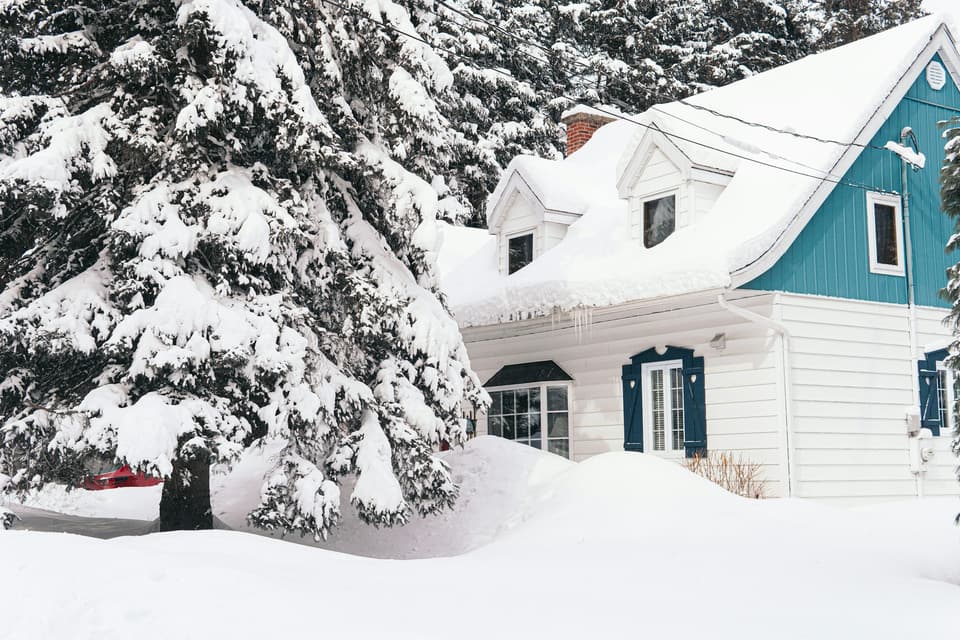
What a Minneapolis roof is designed for
Minnesota's building rules set a ground snow load of 50 pounds per square foot for Hennepin County, one of the two zones in the state; the northern counties use 60. New roofs are designed from that figure. Older houses were built to whatever practice applied at the time, and a 1920s rafter is not necessarily the same as a modern one. Even so, houses in the Twin Cities rarely fail under snow alone. The Twin Cities average about 54 inches of snow a season, much of which melts, settles or blows off between storms.
Weight is about water, not depth
A foot of fresh, dry January powder weighs a fraction of what a foot of wet March snow weighs, and ice weighs more again. Rain falling on an existing snowpack is the scenario that turns a deep roof into a heavy one. Drifts matter too: snow piles up on the low side of a ridge, against a dormer or on a lower roof below a taller one, so a garage roof under the house eave can carry far more than the depth on the main roof suggests.
Signs worth calling about
- Interior doors upstairs that suddenly stick, or new cracks in upstairs plaster
- A ridge line or roof plane that visibly sags
- Creaking or popping from the roof or attic during heavy snow
- Water stains appearing in the middle of a ceiling, not just at the edges
Raking safely
A roof rake with an extension handle lets you pull the bottom three or four feet of snow off from the ground. That reduces both the weight at the eave and the meltwater that feeds ice dams. Do it gently; scraping hard takes granules off the shingles. Watch for power lines, and stand clear of what slides down. Do not climb up with a shovel, and do not try to clear a steep roof from a ladder. If a roof needs clearing beyond what a rake reaches, that is work for a crew with harnesses.
Worried about snow or ice on the roof this winter? Call and describe what you see. Someone local can tell you whether it needs attention now or can wait for a thaw.
Where to go next
Common questions
Should I shovel my roof after every storm?
No. Raking the lower edge from the ground after big storms is enough for most houses. Getting on the roof is the risky part.
Is my flat garage roof at more risk?
Flat and low-slope roofs hold snow and drifts longer and do not shed meltwater, so they deserve more attention than a steep main roof.